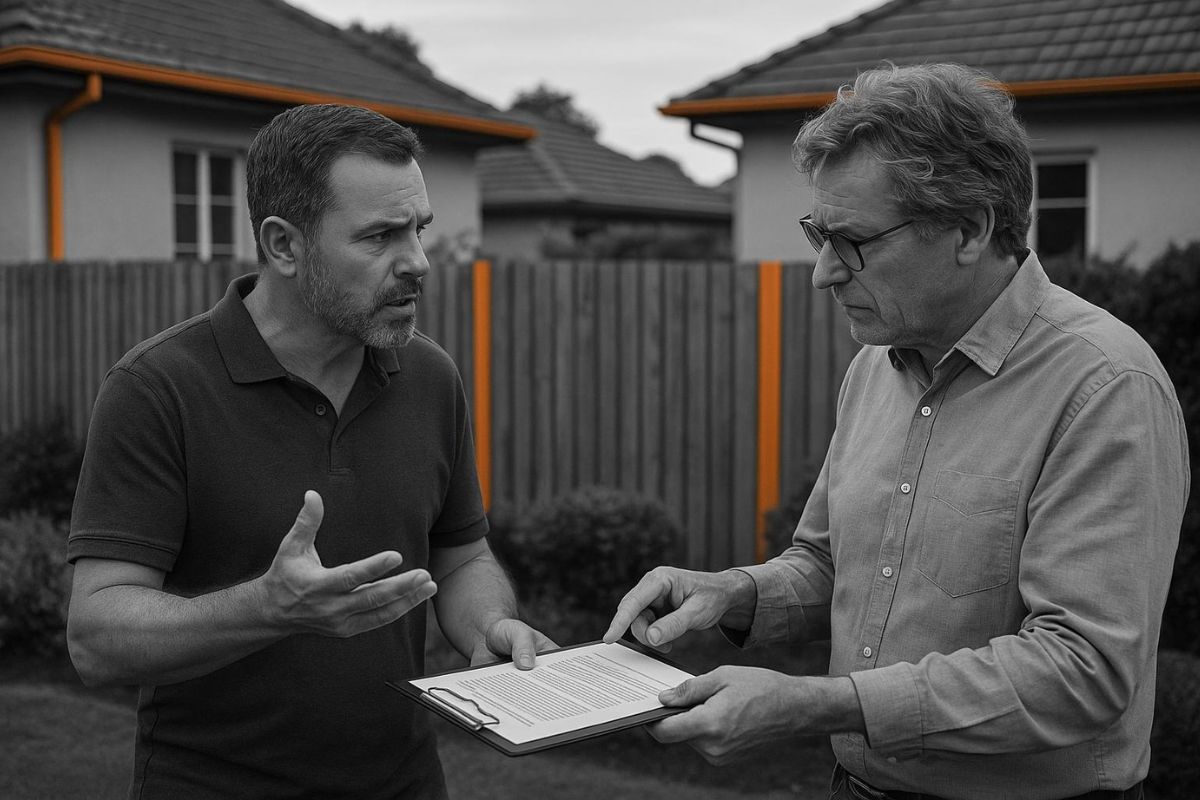
Boundary disputes between South African homeowners are more common than you might think. They often start with something small, an overhanging tree, a new wall, or shrubs that creep across the property line, but if left unresolved, they can become stressful and costly. The good news is that most disputes can be prevented or resolved with the right information, communication, and legal guidance.
This guide explains how to understand your property boundaries, the most frequent causes of disputes, and the steps you can take to prevent or resolve them, helping you protect your property while maintaining positive neighbourly relationships.
Understanding your property boundaries
Your property’s boundaries are legally defined and recorded in its title deed, which specifies the land’s size in square meters. However, physical markers such as walls, fences, or hedges may not always align with the legal boundaries.
It is therefore important to know how to determine the exact boundaries of your property. There are two options on how you can do this:
- Conduct a land survey: The first option is to have a licensed surveyor provide a detailed map of your property, clarifying the exact location of your property’s legal boundaries.
- Check cadastral records: The second option is to check cadastral records that you can find at the Surveyor-General’s Office. They hold cadastral diagrams that can help verify boundary locations.
Knowing the precise limits of your property can prevent disputes before they arise.
Common causes of boundary disputes
Boundary disputes often arise from various issues that can create tension between neighbours. One common cause is encroachments, where structures, fences, or driveways are built over the property boundary, infringing on a neighbour’s land. These physical intrusions can lead to disagreements over property rights and ownership.
Another frequent issue is overgrowth, where trees, shrubs, or other vegetation cross into a neighbouring property. Overhanging branches or invasive roots can become a source of frustration, particularly if they cause damage or obstruct views.
Ambiguity in boundary lines also contributes to disputes. When the exact location of a property boundary is unclear or misinterpreted, misunderstandings can arise, often fuelled by incomplete surveys or outdated records.
Lastly, zoning violations can lead to boundary disputes, particularly when property modifications breach local municipal regulations. These violations might involve building heights, fence placements, or setbacks, creating legal and neighbourly challenges.
While these issues can strain relationships and lead to costly legal battles, taking proactive steps, such as maintaining clear communication and consulting legal or zoning experts, can help prevent or de-escalate conflicts.
Preventing property boundary disputes
1. Clear communication
Before you build, plant, or make changes near the boundary, speak to your neighbours. A simple conversation can prevent misunderstandings. Remember: being a good neighbour adds value to your home, too. Remember, being a good neighbour actually adds to the value of your property.
2. Follow Zoning Laws
Ensure your plans align with local zoning laws and building regulations. Municipalities may have specific rules about fence heights, encroachments, and overgrowth management.
To learn about the zoning laws in your area, follow these steps:
- Identify your local municipality: Zoning laws vary by municipality, so start by identifying the governing body responsible for your area. This typically refers to your local city or town council.
- Visit the municipality’s office or website: Many municipalities have zoning information available online. Check their website for zoning maps, bylaws, or downloadable documents. If the information isn’t available online, visit the municipal office in person to request access to relevant materials.
- Consult a town planner or zoning expert: Town planners or zoning consultants specialise in understanding and navigating local zoning regulations. They can provide detailed advice and assist in interpreting complex zoning by-laws that may affect your property.
- Review your property’s title deed: Your property’s title deed often contains information about zoning restrictions or conditions attached to your land. Reviewing this document can offer insights into what is permitted.
- Request a zoning certificate: A zoning certificate, available from your municipality, will specify your property’s current zoning designation and what it allows. This document is essential for making informed decisions about development or renovations.
3. Keep boundaries clear
Maintaining fences and other boundary markers is essential for preventing disputes about where your property ends and your neighbour’s begins. Regular upkeep of these physical markers ensures that the boundaries remain clearly defined and visible over time, reducing the likelihood of misunderstandings or encroachments.
Start by inspecting your fences or boundary markers periodically for signs of wear, damage, or shifting. Environmental factors such as weather, soil erosion, or plant overgrowth can impact their integrity and positioning. Address any issues promptly by repairing or replacing damaged sections and clearing away overgrowth that might obscure the boundary line.
If a fence or marker needs significant work or replacement, it’s a good idea to inform your neighbour beforehand. Open communication about the planned maintenance fosters goodwill and provides an opportunity to confirm agreement on the boundary’s location.
For additional clarity, you might consider installing permanent markers, such as corner posts, to define key points of the boundary. If there’s any doubt about the exact boundary line, consulting a surveyor can provide accurate measurements and documentation.
Resolving property boundary disputes
When disputes arise, homeowners have several options:
1. Start with communication
Approach your neighbour calmly and discuss the issue. Propose a practical solution, such as trimming an overhanging tree or sharing costs to reposition a boundary wall.
2. Mediation or arbitration
If direct communication fails, consider alternative dispute resolution mechanisms. Mediators and arbitrators can help you and your neighbour reach a mutually beneficial agreement without the time and expense of court proceedings.
3. Consult local zoning Laws
If the dispute involves a potential zoning violation, consult municipal regulations. If a violation exists, lodge a complaint with the local authority or consult a legal professional for guidance.
4. Seek legal advice
If all other avenues fail, consult a property attorney. They can guide you through options such as filing a claim in the Magistrate’s Court or High Court, depending on the complexity and value of the case.
5. Avoid self-help
Resist the urge to take matters into your own hands, such as cutting down a neighbour’s tree or tearing down a fence. These actions could escalate the situation and result in criminal charges or civil claims.
When to Involve a Legal Expert
If communication and mediation fail, or if the dispute involves zoning or structural encroachments, it’s time to seek legal guidance. An attorney can:
-
Clarify your rights under South African law.
-
Help draft binding agreements.
-
Represent you in the Magistrate’s Court or High Court if necessary.
Proactive Homeowner Checklist
To protect yourself from boundary disputes:
-
Keep copies of your surveyor’s diagram and title deed.
-
Maintain fences, walls, and hedges regularly.
-
Talk to your neighbours before making changes near the boundary.
-
Stay up to date with zoning laws in your municipality.
-
Keep a record of communications in case of future disagreements.
Boundary disputes don’t need to turn into legal battles. With the right knowledge and open communication, you can safeguard your property while maintaining strong neighbourly ties.
Article Source: https://www.myproperty.co.za/news/legal/how-to-handle-boundary-disputes-between-neighbours-30-09-25